Thursday, April 12, 2012

NETTIE, WV FIGHTS PLANS FOR WELL PAD NEAR ITS WATER SUPPLY

Nettie PSD will hold another meeting to discuss this issue at the Nettie Fire House on April 24 at 7 p.m. so be there and bring a friend! 

At the meeting, which was extremely well-attended by around 80 people, BRC employee Sam Sweatt referred to a single well, 5-H. In fact, the site is post-marked through 8-H! Yep.. we have the photos guys!


I would like to add that ALL of Bluescape's activity in Nicholas County is within the Upper Gauley River watershed and that, whether through water extraction for drilling and fracking, or by pollution consequential to this industrial process, ALL water users in our area will be inpacted one way or the other. With Acid Mine Discharge leading to aquifer/well contamination already causing ongoing long-term problems here, we hardly need the additional prospect of water poisoning by fracking activities....

12th April 2012
by C.V. Moore, Beckley Register Herald Reporter
Residents Voice Concern at Nettie Meeting

NETTIE — Concerned about a proposed horizontal gas well near their water supply, the Nettie Public Service District turned out about 80 residents to an “emergency” meeting Tuesday evening.

The group has elected to present an ordinance to the Nicholas County Commission to ban drilling in the county.

Tuesday’s was the second such meeting held in Nettie since the community noticed an ad in the paper on March 8 stating that Bluescape Resources Co. (BRC) would be proposing a well in the Panther Creek watershed.

PSD Chair David McMillion says the well would be located above the headwaters of Panther Creek — where the PSD gets its public drinking water — and “could affect or contaminate” the water supply.

“Even if there’s only a 1 percent chance of that happening, it’s too much,” said attendee Ralph Kelly, who made the motion to create the county ordinance. “We can’t afford to move if our water is polluted, even temporarily.

“That would be a tremendous burden on us and that’s why we need to take an action to protect ourselves. It’s not because we’re being radical, but because we have investments here.”

But county- and city-wide bans on drilling have so far been ineffectual in West Virginia, since state and federal law regulate the practice.

“The county government cannot interfere with any state law,” says Fayette County Prosecuting Attorney Carl Harris. “On the county level, there is very little they can do.”

“We’re going to take it as far as we can and see what happens,” says McMillion.

The PSD has approached Appalachian Mountain Advocates about potential litigation and McMillion says they have responded positively.

The PSD also sent letters to various personnel at the West Virginia Department of Environmental Protection (DEP), Environmental Protection Agency, Nicholas County Commission, corporate owners of land and mineral rights in the area, politicians and a lawyer.

A petition opposing the well has been signed by hundreds of area residents so far.

“The primary issue is not are you going to stop drilling,” Sen. Ron Miller told those gathered at the Nettie Fire Hall. “The primary issue is your watershed, and that’s where the DEP needs to be very active.”

PSD Secretary Bill Fox says the utility provides water to 1,375 homes. A planned extension will serve approximately 100 more in Carl and Green Valley.

Fox says a deep mine destroyed the water table in Green Valley years ago.

“People lost their wells,” he says. “They’ve been hauling water for 25 years.”

McMillion estimates that the well would be 1.5 miles as the crow flies from the dam where the PSD collects its water.

A representative from BRC, Sam Sweatt, attended the meeting.

“My reason for being here is to listen to your concerns and see if we can do anything to fall in line,” he told those gathered.

Local residents and members of the group Stand Up Now (STUN) — which has been protesting and watch-dogging BRC’s operations since last autumn — hammered Sweatt with questions about earthquakes, fracking chemicals, jobs, water usage and the company’s flare near Richwood.

Caroline Snyder, who has worked with STUN in the past, countered and contradicted some of Sweatt’s information during the meeting.

“The long term job creation is minimal,” she said. “The environmental devastation could be catastrophic.”

As for the particular well under discussion, Sweatt says it will be an “extended period of time” before it is drilled, if at all.

“We’ll submit a lot of permits that won’t go to fruition,” he says. “We’re looking now at determining the viability of the field. That one is close to some others we already have data on.”

BRC has drilled seven wells in Nicholas County so far, four of which have been fracked.

Mark Spencer’s farm borders the site of the proposed well. He has three springs and a well where he sources his drinking water.

“The way I feel about it is a person has enough to worry about without having to worry about losing your water or getting water contaminated,” he says. “They will be drilling through the water table where I get my water.”

Spencer has had some encounters with men he says are doing geophysical research and surveying the drill pad site near his property.

A member of the West Virginia Surface Owners’ Rights Organization, he complains that they offered no proof of their right to be on the property. When he told them to leave, he says they did, but came back when he wasn’t there.

“They were doing things at dusk out there, kind of sneaky it seemed to me,” he says. “And they left lunch trash on the farm.

“They were very disrespectful to landowners in my opinion.”

On April 23, a representative from the West Virginia Surface Owners’ Rights Organization will give a presentation at the Richwood Public Library at 7 p.m.

The PSD will hold another meeting to discuss this issue at the Nettie Fire House on April 24 at 7 p.m.

— E-mail: cmoore@register-herald.com

and

Gas company says well drilling won’t begin anytime soon

NETTIE — Some Nettie residents may have their hackles raised over a potential horizontal gas well near the community’s water source, but the gas company says it won’t be drilling the well anytime soon.

An ad announcing Bluescape Resources Co.’s (BRC) intention to apply for drilling permit 5-5H ran in a local paper on March 8, but the permit application for this particular well has not yet been completed.

More importantly, BRC’s Completion/Production Manager Chad Touchet says of six potential data-gathering wells the company may drill, the 5-5H well is ranked pretty low in terms of viability.

“It’s not on our radar right now to drill,” says Touchet. “We don’t really need this data right now.”

The wells BRC is considering drilling are not typical production wells. Rather, they would help the company form a picture of the economic viability of further drilling in the area.

Touchet says the company would like to drill one — perhaps two — more wells this year, beginning in July or August.

Though he would not disclose their specific location at this time, he says they are “nowhere near” Nettie.

The water management plan for the well or wells is currently being hashed out by BRC, says Touchet.

Geology, operational feasibility and economics all played into the ranking of the six potential wells.

Despite these limited plans, the company will likely apply for permits for all six potential wells.

“Because it such a lengthy process for permitting, we wanted to have all of our possible potential drills submitted,” says Touchet.

That doesn’t mean the company will drill them immediately, or at all.

“We can let the permits expire and that’s fine with us, just as long as we have them,” Touchet says.

He says with gas prices so low right now, BRC is being “picky” about where they drill.

—E mail: cmoore@register-herald.com

Wednesday, April 11, 2012

WV COUPLE SUE CHESAPEAKE ENERGY OVER FOULED WELL

From Texas to Wyoming.. from Colorado to Pennsylvania.. and now here in West Virginia, hundreds of wells and aquifers have been contaminated nationwide by vertical/horizontal gas drilling and hydraulic fracturing. The drilling utilizes over three hundred toxic chemicals to fracture the earth one mile in several directions from the vertical drill-bore. Our state forests, where generations of West Virginians have hunted, fished, and hiked, are being defaced by a growing network of well pads. But even more disturbing are the effects that we can't see. Unknown chemicals are being pumped thousands of feet underground. The extreme pressures involved in the hydro-fracturing process are forcing methane gas into people's homes and into their water supplies. Thousands of gallons of chemicals have been spilled in our forests and streams. It's clear to me that hydro-fracturing is the single biggest environmental threat to West Virginia that this generation faces, and it has hardly started...
Above: Fracking trucks at a well site
The State Journal, April 2nd 2012

Two Marshall County residents claiming Marcellus shale drilling adjacent to their property rendered their water supply unusable are taking their fight to federal court.

Jeremiah Magers and Andrea Magers originally filed the suit Feb. 24 in Marshall County Circuit Court against Chesapeake Appalachia. The suit was removed to federal court March 30.

According to their suit, the Magers say they used a water well near their home because public water is not available.

The Magers claimed as soon as Chesapeake started drilling gas wells, they started to notice methane gas from their well and a nearby stream.

"Sufficient gas was present that the plaintiffs could ignite both the water and Fish Creek," the suit stated.
Now, the Magers claim they must purchase and haul water to their house.

 "The defendant has failed to provide the plaintiffs an alternate water supply or compensate them for the contamination of their water well and their costs in purchasing water," the suit stated.

Chesapeake Appalachia has not yet filed a response. The case has been assigned to U.S. District Judge Frederick P. Stamp Jr.

Here is an eye-opening article from Cleantechnica which explores the problem further:

Report Shows Natural Gas Fracking Creates More Methane in Underground Water

Research scientists writing for Proceedings of the National Academy of Sciences of the United States of America (PNAS) report that while directional drilling and hydraulic-fracturing technologies are dramatically increasing natural-gas extraction, the aquifers overlying the Marcellus and Utica shale formations of northeastern Pennsylvania and upstate New York show systematic evidence of methane contamination of drinking water associated with shale-gas extraction.

The complete PNAS report directly cites hydraulic fracturing as a contributor: “the process of hydraulic fracturing generates new fractures or enlarges existing ones above the target shale formation, increasing the connectivity of the fracture system. The reduced pressure following the fracturing activities could release methane in solution, leading to methane exsolving rapidly from solution, allowing methane gas to potentially migrate upward through the fracture system.” 

Of course, vested interests will continue to "lie and deny"...
Research scientists writing for Proceedings of the National Academy of Sciences of the United States of America (PNAS) report that while directional drilling and hydraulic-fracturing technologies are dramatically increasing natural-gas extraction, the aquifers overlying the Marcellus and Utica shale formations of northeastern Pennsylvania and upstate New York show systematic evidence of methane contamination of drinking water associated with shale-gas extraction.
The complete PNAS report directly cites hydraulic fracturing as a contributor: “the process of hydraulic fracturing generates new fractures or enlarges existing ones above the target shale formation, increasing the connectivity of the fracture system. The reduced pressure following the fracturing activities could release methane in solution, leading to methane exsolving rapidly from solution, allowing methane gas to potentially migrate upward through the fracture system.”
Research scientists writing for Proceedings of the National Academy of Sciences of the United States of America (PNAS) report that while directional drilling and hydraulic-fracturing technologies are dramatically increasing natural-gas extraction, the aquifers overlying the Marcellus and Utica shale formations of northeastern Pennsylvania and upstate New York show systematic evidence of methane contamination of drinking water associated with shale-gas extraction.
The complete PNAS report directly cites hydraulic fracturing as a contributor: “the process of hydraulic fracturing generates new fractures or enlarges existing ones above the target shale formation, increasing the connectivity of the fracture system. The reduced pressure following the fracturing activities could release methane in solution, leading to methane exsolving rapidly from solution, allowing methane gas to potentially migrate upward through the fracture system.”
Active gas-extraction areas having one or more gas wells within a 1-kilometer average not only imperil drinking-water wells, they are also potential explosion hazards, the report states.

Thursday, March 8, 2012

END IN SIGHT FOR BLUESCAPE GAS FLARE RICHWOOD WV

The company has until May 31 to extinguish the flare that has been burning since August 2011

Great reportage by Rick Steelhammer, Charleston Gazette.

CHARLESTON, W.Va. -- The state Department of Environmental Protection has set May 31 as the deadline for extinguishing a flare that has been burning gases from three Nicholas County Marcellus Shale exploration wells for more than six months, despite state laws limiting natural gas flaring to 30 days per year. 

Dallas-based Bluescape Resources Co. began flaring gas from three Marcellus wells near Fenwick on Aug. 28 last year. Responding to citizen complaints about the prolonged flaring, mainly from the newly formed organization Stand Up Now, the DEP's Division of Air Quality inspected the Fenwick area site on Oct. 12 and issued BRC a notice of violation Oct. 26.

On Nov. 14, in a response to the violation notice, company officials said BRC had to flare the natural gas produced by the wells since "no pipeline exists in the area" to collect and transport the gas. Lacking a pipeline, gas from the wells had to be released, measured and burned "to test the viability of the natural gas reserves in the area," they said. 

A pipeline linking the Richwood area to Frametown is being planned.

The company response went on to state that BRC could not "shut in the wells or the flare without suffering irreparable financial damage." The Fenwick area wells "are generating data on natural gas reserves in a portion of the state that has previously not been tested. The information being generated is crucial not only to BRC but to the mineral owners and other lessees in the area."

BRC maintained in its response letter that prior to installing the wells, the company consulted with the DEP's Office of Oil and Gas about flaring plans at the Fenwick site, and was told that no permits were needed.

In late November, the company filed a request for a temporary permit to continue operating the flare. On Dec. 7, a meeting was held with Division of Air Quality personnel to discuss the permit and resolve the notice of violation. On Dec. 15, the DAQ sent BRC a Notice of Deficiency letter seeking more information from the company in order to process the temporary permit.

In the recently released consent order, dated Feb. 22, BRC agreed, among other things, to convert the flare from a vertical to a horizontal configuration, to monitor for visible emissions, and to cease operating the flare "on or before combusting a total of 1,321 million standard cubic feet, or no later than May 31, 2012, whichever is sooner."

BRC also agreed to pay an administrative penalty of $50,000 to resolve all DAQ violations.

BRC's permit application lists maximum possible hourly emissions from the flare as 35,163 pounds of carbon dioxide and 110 pounds of carbon monoxide. 

"I'm glad to know that the state has established a limit" regarding how long natural gas flares are allowed to burn, said Stephanie Hamilton, among those opposing the continued flaring of the Fenwick wells.

Hamilton said she would like to see BRC's fine money be used to add a Richwood-area air quality monitoring station to the Division of Air Quality's current network of 23 monitoring sites across the state. The nearest station to the Fenwick wells is found at Sam Black Church in Greenbrier County, "many miles and several mountains away," she said.

 With 13 Marcellus wells under permit in the Richwood area, and 12 in the vicinity of Craigsville, and up to 10 wells possible per drilling pad, "the potential for hundreds of new wells and new flares is possible in Nicholas County," Hamilton said. 

Hamilton said state law allows for fines of up to $250,000 per well for the nonpermitted flaring done by BRC. "I wonder how the DEP justified a $50,000 fine," she said.

Hamilton said the orange glow from the flare can be seen from Richwood and Craigsville at night, particularly during overcast conditions.

Monday, March 5, 2012

BLUESCAPE FINED A PALTRY $50,000 FOR ILLEGAL FLARING NEAR RICHWOOD, NICHOLAS COUNTY WV

BRC Operating Company, LLC, who have been illegally operating a gas flare near Richwood, Nicholas County WV for several months, finally gets a paltry fine from the DEP of $50,000.. bear in mind that they could have been fined the maximum of $250,000 per well.. and that they were flaring THREE wells up there. They have been ordered to construct and monitor a horizontal flaring system. "The Company shall install a horizontal flare on or before March 1, 2012". Has this been done? If not, then they could be in violation of this consent order. 
My spies are out!

west virginia department of environmental protection
Division of Air Quality
601 57th Street SE
Charleston, WV 25304
Phone: 3049260475 FAX: 3049260479
Earl Ray Tomblin, Governor
Randy C. Huffman, Cabinet Secretary
www.dep.wv.gov
CONSENT ORDER
ISSUED UNDER THE AIR POLLUTION CONTROL ACT, WEST VIRGINIA CODE, CHAPTER 22, ARTICLE 5, SECTION 4
TO: BRC Operating Company, LLC
Mr. C. John Wilder, CEO
200 Crescent Court
Suite 200
Dallas, TX 75201
DATE: February 22,2012
ORDER NO.: CO-R13-E-2012-05
FACILITY ID NO.: 067-00108

INTRODUCTION
This Consent Order is issued by the Director of the Division of Air Quality (hereinafter Director), under the authority of West Virginia Code, Chapter 22, Article 5, Section 1 et seq. to
BRC Operating Company, LLC (Company).

FINDINGS OF FACT
1. The Company owns and operates the Rupert Pad Site 2, consisting of three natural gas exploration wells to determine the viability of future production development, (Facility) located near Fenwick, WV. The Facility is a Marcellus Shale horizontal natural gas well, which includes a temporary flare.
2. On October 12, 2011, personnel from the Division of Air Quality (DAQ) conducted an inspection of the Facility in response to citizen complaints related to operation of the temporary flare at the well site. The DAQ determined the natural gas temporary well flare exceeded the maximum number of cumulative days of operation allowed within a twelve (12) consecutive month period in accordance with Section 6.1 of 45CSR6 (Rule 6) to exempt the Facility from being required to obtain a 45CSR13 (Rule 13) temporary permit.
3. On October 26, 2011, the DAQ issued a Notice Of Violation (NOV) to the Company for violating Rule 6 for not obtaining a permit in accordance with the provisions of W.Va. Code §22-5-1 et seq. and Rule 13. The NOV required the Company to respond within ten (10) days to address the violation.

Page 2 of6
4. On November 14, 2011, the DAQ received the Company's response to the NOV. The Company stated "The Site is located in a remote part of Nicholas County, and to date no natural gas pipelines have been installed on or in the vicinity of the Site ..... The Site is the first location in Nicholas County to test the viability of the natural gas reserves in the area. Because no pipeline exists in the area, BRC must flare the natural gas that is produced by the three wells at the Site."
5. On November 16, 2011, the Company submitted a 45 CSR 13 (Rule 13) temporary permit application to the DAQ for construction and operation of the flare.
6. On December 7, 2011, the Company met with the DAQ to resolve the violation and discuss the temporary Rule 13 permit application.
7. On December 15,2011, the DAQ sent the Company a Notice of Deficiency (NOD) letter to request additional information to process the permit application and to deem the permit application technically and administratively complete.

ORDER FOR COMPLIANCE
Now, therefore, in accordance with Chapter 22, Article 5, Section 1 et seq. of the West Virginia Code, it is hereby agreed between the parties, and ORDERED by the Director:

1. The Company shall revise the 45 CSR 13 (Rule 13) permit application submitted to make it administratively and technically complete for construction and operation of a temporary natural gas flare on or before March 15,2012.
2. The Company shall expeditiously correct any deficiencies and errors found in the Rule 13 permit application submitted providing necessary, omitted, or supplemental information identified to the Company by the Director or his authorized representative. After March 1, 2012, the Company shall submit a written and certified mail response to any further written Notice of Deficiency (NOD) forwarded by the Director or his authorized representative within fifteen (15) calendar days of receipt of the NOD. If the Company does not respond
within fifteen (15) calendar days, then the Company may be subject to stipulated penalties.
3. The Company shall comply with all state and federal applicable rules and regulations.
4. The Company shall not exceed the mass emission limitations set forth in the submitted Rule 13 permit application (R13-2904T) and/or any updates thereto. The Company shall comply with all other requirements set forth in the submitted Rule 13 permit application (R13-2904T) and/or any updates thereto.

Page 3 of 6
5. The Company shall install a horizontal flare on or before March 1, 2012 using good engineering practices so as to maximize the combustion efficiency. The Company may operate the vertical flare as a back-up to the horizontal flare and also to start-up the horizontal flare.
6. The Company shall maintain records of all inspections of both flares and/or preventive maintenance procedures.
7. The Company shall design, maintain, and operate both the horizontal and/or vertical flares to ensure proper destruction efficiency of .air pollutants and to ensure proper combustion efficiency.
8. The Company shall operate the horizontal and/or vertical flares with a flame present at all times.
9. The Company shall install, maintain, and operate a thermocouple or any other equivalent device to detect the presence of a flare pilot flame on both flares. The Company shall maintain records of the date, time, and duration each time the Company does not detect the presence of a flare pilot flame.
10. The Company shall design, maintain, and operate both flares with no visible emissions as determined by the Method 22, except for periods not to exceed a total of 5 minutes during any 2 consecutive hours.
11. The Company shall conduct an initial Method 22 visual emission observation on both flares to determine the compliance with the visible emission provisions. The Company shall take a minimum of two (2) hours of visual emissions observations on both flares. The Company shall conduct Method 22 visual emission observations on both flares on or before March 15, 2012.
12. The Company shall conduct daily Method 22 visible emission observations of both flare stacks to ensure proper operation for a minimum often (10) minutes each day the flares are in operation.
13. The Company shall maintain records of all visual emission observations. If Company observes any visible emissions, the Company shall notify DAQ within twenty-four (24) hours.

Page 4 of6
14. The Company shall not combust greater than a total of 1321 million standard cubic feet (scf) and shall not exceed a maximum 7 million standard cubic feet per day. The Company shall cease operation of both the vertical and the horizontal flare on or before combusting a total of 1321 million standard cubic feet or no later than May 31, 2012, whichever is sooner. The Company shall maintain daily records of the amount of natural gas combusted by the flare and the total scf combusted.
15. The Company shall install, maintain, and operate instrumentation to continuously monitor the gas combustion rate in to both flares in standard cubic feet per minute (SCFM). The monitor(s) shall be installed, maintained.. and operated according to the manufacturer's recommendations.
16. The Company shall maintain records of all startups, shutdowns, and/or malfunctions of the flare. These records shall include the date, time, and duration of each event. For each such case associated with an equipment malfunction, additional information shall also be recorded:
(1) The cause of the malfunction,
(2) Steps taken to correct the malfunction, and
(3) Any changes or modifications to equipment or procedures that would help prevent future recurrences of the malfunction. The Company shall notify the DAQ within twentyfour (24) hours of all startups, shutdowns, and/or malfunctions.
17. The Company shall install, maintain, and operated all above-ground piping, valves, pumps, etc. that service lines in the transport of potential sources of regulated air pollutants to prevent any substantive fugitive escape of regulated air pollutants. Any above-ground piping, valves, pumps, etc. that show signs of excess wear and that have a reasonable potential for substantive fugitive emissions of regulated air pollutants shall be replaced. The Company shall maintain records of any replacement made under this Section.
18. Within thirty (30) days of the effective date of this Order, the Company agrees to pay a total civil administrative penalty of fifty thousand dollars ($50,000) to resolve the violations described in this Order. All payments shall be made by check payable to the Air Pollution Education and Environment Fund and shall be sent to the Division of Air Quality, Attention:
John A. Benedict, Director, 601 57th Street, SE, Charleston, WV 25304. In addition, if the Company fails to pay the foregoing amount timely or to complete any of the requirements contained in this Order to the satisfaction of the Director or within the time limits set forth herein, the Company agrees to pay a stipulated penalty of one thousand dollars ($1,000) to the Air Pollution Education and Environment Fund for each day that the action remains incomplete. The Director shall first notify the Company in writing that the facility is in violation of the terms of conditions of the Order, and the stipulated penalty shall then become immediately due and payable. Payments made pursuant to this paragraph are not
tax-deductible expenditures for purposes of State or federal law.

Page 5 of 6
OTHER PROVISIONS
1. The Company hereby waives its right to appeal this Order under the provisions of Chapter 22, Article 5, Section 1 of the Code of West Virginia. Under this Order, the Company agrees to take all actions required by the terms and conditions of this Order and consents to and will not contest the Director's jurisdiction regarding this Order. However, the Company does not admit to any factual and legal determinations made by the Director and reserves all rights and defenses available regarding liability or responsibility in any proceedings other than proceedings, administrative or civil, to enforce this Order.
2. The Director reserves the right to take further action if compliance with the terms and conditions of this Order does not adequately address the violations noted herein and reserves all rights and defenses which he or she may have pursuant to any legal authority, as well as the right to raise, as a basis for supporting such legal authority or defenses, facts other than those contained in the Findings of Fact.
3. If any event occurs which causes delay in the achievement of the requirements of this Order, the Company shall have the burden of proving that the delay was caused by circumstances beyond its reasonable control which could not have been overcome by due diligence (i.e., force majeure). Force majeure shall not include delays caused or contributed to by the lack of sufficient funding. Within three (3) working days after the Company becomes aware of such a delay, notification shall be provided to the Director and shall, within ten (10) working days of initial notification, submit a detailed written explanation of the anticipated length and cause of the delay, the measures taken and/or to be taken to prevent or minimize
the delay. If the Director agrees that the delay has been or will be caused by circumstances beyond the reasonable control of (i.e., force majeure), the time for performance hereunder shall be extended for a period of time equal to the delay resulting from such circumstances. A force majeure amendment granted by the Director shall be considered a binding extension of this Order and of the requirements herein. The determination of the Director shall be [mal and not subject to appeal.
4. Compliance with the terms and conditions of this Order shall not in any way be construed as relieving the Company of the obligation to comply with any applicable law, permit, other order, or any other requirement otherwise qpplicable. Violations of the terms and conditions of this Order may subject the Company to additional penalties and injunctive relief in accordance with the applicable law.
5. The provisions of this Order are severable and should a court or board of competent jurisdiction declare any provisions to be invalid or unenforceable, all other provisions shall remain in full force and effect.

Page 6 of 6
6. This Order is binding on the Company, its successors and assigns.
7. This Order shall become effective immediately upon signing by both parties.
8. This Order shall terminate upon the issuance, withdrawal, or denial of the Rule 13 permit required to be obtained under this Order and the payment of all penalties required under this Order.
-------.~-
BRC Operating Company, LLC
Mr. C. John Wilder, CEO -'''-'Da"te__
J0 . Benedict, Director
ivision of Air Quality

Wednesday, February 15, 2012

RED WATER AND FOAM: FRACKING POLLUTION NEAR RICHWOOD, WEST VIRGINIA

These photos were from an event late last year. Getting anyone, including the WV DEP (Department of Environmental Permitting) into action has been as effective as pushing string uphill.

So I guess we'll just have to wait around for the next pollution incident.

Here are the photographs I took:


Above: Sampling the foam

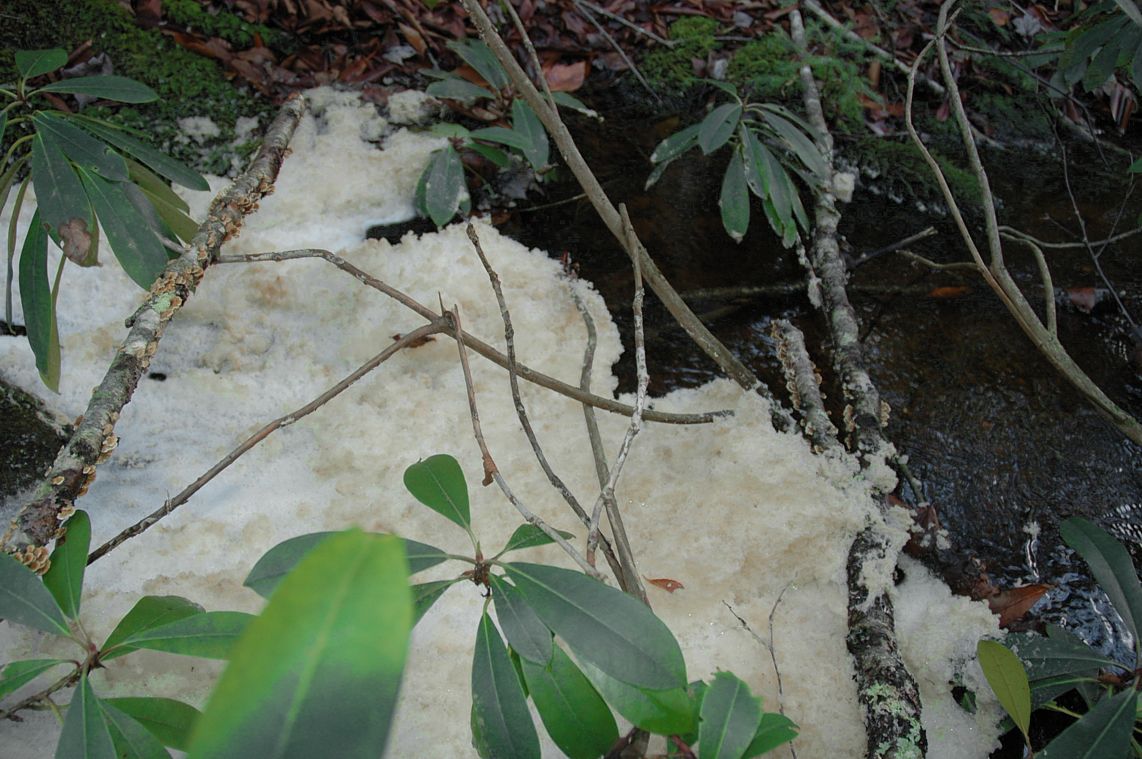
Above: The foam was first spotted at the side of the road at the bottom of a series of streams and small waterfalls. In parts it looked like clumps of snow (the snow had been melting)


That foam sure does hang around!


Water running down the hill around 100 yards away was CLEAR! Around 1/2 a dozen streams were running clear red/brown.. PH was 6.8 by the way so Acid Mine Drainage is definitely not the issue.

Above: Foam and red Water

Above: Red Stream running into the Cherry River

Above: Foaming waterfall running into same stream

Above: Two Foamy Streams Coalesce.. they empty into the Cherry River


Above: Two of us who handled this stuff ended up with red, sore, burning hands.. wonder what the deer thought when they drank it?


Above: One of the streams shows the unnatural red color and the white foam. This is NOT Acid Mine Waste by the way..


Accumulating further up the hillside..


Above: The polluted water finds its way down into a culvert and into the Cherry River. DEP didn't even get back to us for A WHOLE MONTH after we reported this incident!

Above: Polluted water entering via a small tributary of the Cherry River

Above: At a rather higher altitude above the river, we found this drainage ditch.. this red/brown color is identical to many other spills recorded through PA, WY and other fracked states.


Foam caught in Laurel leaves as the water churns down to the Cherry River


Friday, February 10, 2012

37% CANCER RATE WHERE BENZENE FROM FRACK-WASTE IS LEAKING INTO THE SOIL FROM POROUS POLYETHYLENE PIPELINES

FRACKING, GERMANY - PLEASE WATCH THIS VIDEO
37% of households in one gasfield have at least one person with cancer. Folks, there is *NO* SAFE LEVEL FOR BENZENE! Deadly Benzene migrates through polythene piping and it seems that the industry has known this for many years. What pipeline is being used in West Virginia? PA? TX? WY? A multi-layer pipeline IS available with a protective aluminum layer but is much more expensive and there is no legal requirement to use it. Are the likes of Chesapeake Energy, Cabot etc KNOWINGLY poisoning the environment?
Thanks to Texas Sharon and her Blue Daze blog and Arlington TX Barnett Shale Blogger
For those who can’t watch videos on their computers, here are the Cliff Notes.
  • In the middle of the largest area of drilling and fracking in Germany, there is a cancer cluster.
  • Small town, with cancer in one-third of homes – 27 homes with 10 cancer cases in 9 homes.
  • They’ve been fracking since the nineties. (Sound familiar?)
  • They pipe the flowback and produced water for disposal through pipelines. (Sound familiar?)
  • Testing the soil around these pipelines found 4000 micrograms of benzene. Five micrograms is hazardous to health.
  • Toxicologist says benzene is among the most “alarming chemicals we can imagine.”
  • The German Big Gas Mafia does not see the connection. (Sound familiar?)
  • There is a spiderweb of pipelines all over the place and the contamination found is widespread. (Sound familiar?)
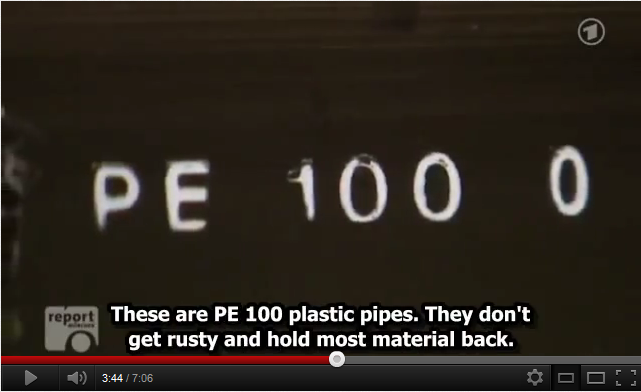
  • The pipe looks like this: (Look familiar?)

  • A plastic and chemistry expert admits benzene will leak through. She says weeks–it can “someday” leak through within weeks.
  • They have known about this since the 60s. (Sound familiar?)
  • Benzene leaked through PE pipelines requiring a 4 year remediation and disposal of  2500 tons of soil.
  • ExxonMobil claims it only became known in 2007. (Interesting admission considering they are still using the pipe.)
  • A Google search reveals that manufacturers admit the pipe is unsuitable for materials containing benzene.
  • Squirming by regulatory agency that allowed pipe and so forth. (Sound familiar?)
Health effects of Benzene:

Benzene causes cancer and other illnesses. Benzene is a "notorious cause" of bone marrow failure. "Vast quantities of epidemiologic, clinical, and laboratory data" link benzene to aplastic anemia, acute leukemia, and bone marrow abnormalities.

The specific hematologic malignancies that benzene is associated with include: acute myeloid leukemia (AML), aplastic anemia, myleodysplastic syndrome (MDS), acute lymphoblastic leukemia (ALL), and chronic myeloid leukemia (CML)
The American Petroleum Institute (API) stated in 1948 that "it is generally considered that the only absolutely safe concentration for benzene is zero." The US Department of Health and Human Services (DHHS) classifies benzene as a human carcinogen. Long-term exposure to excessive levels of benzene in the air causes leukemia, a potentially fatal cancer of the blood-forming organs, in susceptible individuals. In particular, Acute myeloid leukemia or acute non-lymphocytic leukaemia (AML & ANLL) is not disputed to be caused by benzene. IARC rated benzene as "known to be carcinogenic to humans".

Outdoor air may contain low levels of benzene from automobile service stations, wood smoke, tobacco smoke, the transfer of gasoline, exhaust from motor vehicles, and industrial emissions. About 50% of the entire nationwide (United States) exposure to benzene results from smoking tobacco or from exposure to tobacco smoke.

Vapors from products that contain benzene, such as glues, paints, furniture wax, and detergents, can also be a source of exposure, although many of these have been modified or reformulated since the late 1970s to eliminate or reduce the benzene content. Air around hazardous waste sites or gas stations may contain higher levels of benzene. Because petroleum hydrocarbon products are complex mixtures of chemicals, risk assessments for these products, in general, focus on specific toxic constituents. The petroleum constituents of primary interest to human health have been the aromatic hydrocarbons (i.e., benzene, ethylbenzene, toluene, and xylenes). OSHA requires that a mixture "shall be assumed to present a carcinogenic hazard if it contains a component in concentrations of 0.1% or greater, which is considered to be a carcinogen.

The short-term breathing of high levels of benzene can result in death; low levels can cause drowsiness, dizziness, rapid heart rate, headaches, tremors, confusion, and unconsciousness. Eating or drinking foods containing high levels of benzene can cause vomiting, irritation of the stomach, dizziness, sleepiness, convulsions, and death.

The major effects of benzene are manifested via chronic (long-term) exposure through the blood. Benzene damages the bone marrow and can cause a decrease in red blood cells, leading to anemia. It can also cause excessive bleeding and depress the immune system, increasing the chance of infection. Benzene causes leukemia and is associated with other blood cancers and pre-cancers of the blood.

Human exposure to benzene is a global health problem. Benzene targets liver, kidney, lung, heart and the brain and can cause DNA strand breaks, chromosomal damage, etc. Benzene causes cancer in both animals and humans. Benzene was first reported to induce cancer in humans in the 1920s. The chemical industry claims it was not until 1979 that the cancer-inducing properties were determined "conclusively" in humans, despite many references to this fact in the medical literature. Industry exploited this "discrepancy" and tried to discredit animal studies that showed that benzene causes cancer, saying that they are not relevant to humans. Benzene has been shown to cause cancer in both sexes of multiple species of laboratory animals exposed via various routes.

Some women having breathed high levels of benzene for many months had irregular menstrual periods and a decrease in the size of their ovaries. Benzene exposure has been linked directly to the neural birth defects spina bifida and anencephaly.  Men exposed to high levels of benzene are more likely to have an abnormal amount of chromosomes in their sperm, which impacts fertility and fetal development.

Animal studies have shown low birth weights, delayed bone formation, and bone marrow damage when pregnant animals breathed benzene.

Benzene has been connected to a rare form of kidney cancer in two separate studies, one involving tank truck drivers, and the other involving seamen on tanker vessels, both carrying benzene-laden chemicals.

Tuesday, February 7, 2012

MARCELLUS SHALE REALITY TOUR - EPA TESTIING WATER IN DIMOCK PA

If you remember, Dimock is the town in PA where around 70 wells have been contaminated by fracking. Right now, the EPA has moved in and is conducting extensive testing on residents' water wells. It seems that an entire aquifer has been contaminated. Some residents HAVE accepted payoffs from the gas companies to shut up and keep quiet. Those who bravely refuse to accept payoffs KNOW that wrong has been done, that their water has been poisoned forever.. and refuse to bow down without a fight.

THE GAS COMPANY HAS NOW BEEN BANNED FROM DRILLING THERE

But, but.. they keep telling us that fracking is safe!!


FACT: Fracking uses a large amount of water and turns it to hazardous waste. It disturbs and damages underground­ aquifers. And yet it is not regulated or governed by the Clean Water Act. This situation must change!